*************************************************************************************************************************************************
THE DALÍ UNIVERSE SORRENTO
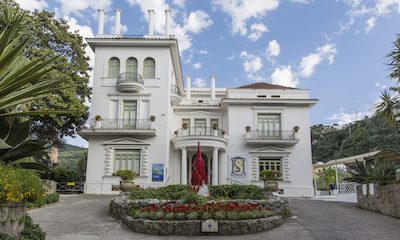
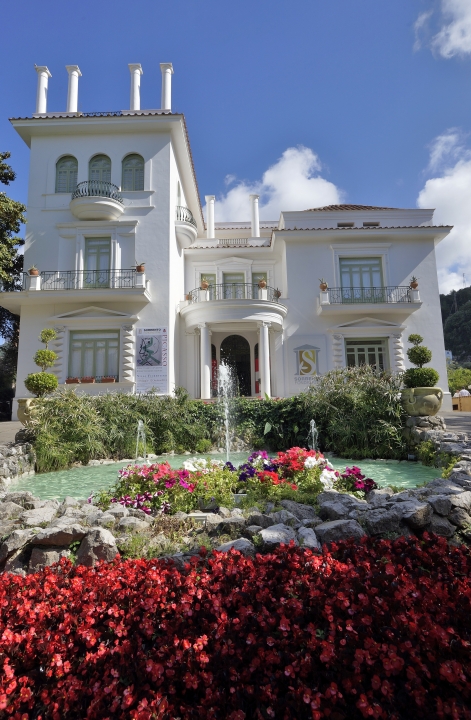
From 14 June to 29 September 2013 at Villa Fiorentino - Sorrento
Inauguration: 14 June 2013 at 7 pm
Opening times: monday - friday 10am to 1pm and 5 pm to 9 pm
saturday, sunday and holidays 10 am to 1 pm and 5 pm to 10 pm
ticket € 5,00 - reduced € 3,00
Presented by the President of the Stratton Foundation, Beniamino Levi
Over 100 works by the Master of Surrealism in a unique exhibition, taking place from 14 June to 29 September 2013 at Villa Fiorentino, “The Dalí Universe Sorrento”. The exhibition entirely dedicated to Salvador Dalí is a truly special occasion, enabling the public to take a closer look at the lesser known aspects of the oeuvre by the great artist, discovering works still not well known such as the monumental sculpture Homage to Terpsichore which has never been exhibited before. A large selection of various works including sculptures in bronze, objects in glass, gold, collages and graphic collections by Dalí the illustrator will be placed inside and outside Villa Fiorentino with the express intention to reveal the source of inspiration of Salvador Dalí’s genius, to promote understanding of the life and art of the Master. This exhibition will allow visitors to delve into the labyrinth like mind of the Master and to admire the creative results of his infinite imagination.
Villa Fiorentino opens its doors to a unique exhibition, presented by the President of the Stratton Foundation Beniamino Levi. H was one of the people who best knew all Dalí’s work, having personally known him and his entourage since the 1960s, meeting him in his homes in Paris, New York and his birthplace, Spain. It was from this series of meetings with the charismatic and eccentric artist who applied the principles of Surrealism to his life, that Levi’s idea for collecting the artist’s works came, forming over the year’s one of the richest and most interesting collections in the world.
The exhibition shows two particularly important aspects of Dalí’s creativity, which allow a deeper interpretation of the artistic work by the Catalan Master: three-dimensional sculpture and the graphic works that illustrate important themes in literature.
Dalí’s exploration of the three-dimensional form gave rise to sculptures representing his iconic images, demonstrating the core characteristics of Surrealism. Significant works, such as Woman Aflame (1980) have a prominent place in the exhibition. The Woman Aflame combines two of Dalí’s obsessions: fire and feminine sensuality, represented by the drawers. Under Freud’s influence, the drawers show the hidden sensuality of women and the mysteries that a woman’s body contains. The inextinguishable flames represent a burning passion, and seem to have a life of their own.
His attitude towards the art form of sculpture was both scientific and metamorphic, which can be seen in a paragraph from his biography “The Secret Life of Salvador Dalí”:
“Today we know that form always derives from a process of investigating the material... the specific reaction of the material when it is subjected to the terrible coercive force of space, which suffocates it, pressing and squeezing it everywhere, until creating that growth which, starting from its life, reaches the precise limitations established by the strict boundaries of its original reaction. Many times, a piece of material driven by an absolute impulse, denies the reaction; while another piece of material manages to create its own particular life, a piece of material that tries to be what it can be, giving in to the pleasure of creating new forms, despite the tyrannical impact of space”.
The important collection of engravings and lithographs, the result of Dalí’s passion for the great literary works, instead shows the public the little known side of Dalí as the illustrator and demonstrates that the artist was an extremely cultured and interesting man. His surrealist interpretation of books ranges from the classics, such as the interpretation of the Bible, to more modern books by contemporary writers. Mythology, religion and history stimulated Dalí to create a wide range of images, personalities and allegories, with which he told the stories we know well. Examples of these rare and lesser known illustrations by Dalí shown at the exhibition are the Caprice de Goya, a reworking of the famous series of prints of 1799 denouncing the “caprices” of the decadent and corrupt Spanish society of that time, the Art of Love and La Vida es Sueno.
The variety of works shown in this exhibition reveals the different techniques and materials explored by Dalí. A space is entirely dedicated to the collaboration between Salvador Dalí and the prestigious French glassware factory Daum Cristallerie. These glass sculptures, with their airy appearance and vivid colours, are a clear link with a more fantastic world. Dalí believed that glass and pâte de verre offered the perfect medium for “the expression of metamorphosis” which, according to him, conveyed his surrealist perception of reality.
In addition to the sculptures, visitors can discover a series of original collages of the Mystic tarot and some surrealist furniture.
There are at least two highlights in this extraordinary exhibition, closely connected to his life and his artistic point of view: time and the monumental sculptures positioned in various strategic points around the town of Sorrento.
Time
The melting clocks that Dalí is famous for, appeared the first time in 1931, in the painting The Persistence of Memory. They clearly show the profoundly fantastic relationship Dalí had with time, his perception of his forced limitations and the importance the artist attributed intrinsically to memory. Dalí’s sentiments about the clock, the guardian of time, are evident in that his clocks are often melting, a type of symbolism that he only reserved for objects he loathed. These liquefying clocks represent the volatility of time, the fading of youth and the impossibility of controlling time. Dalí’s time is not rigid, it is as one with space, fluid. On display at Villa Fiorentino, are the bronze sculptures The Persistence of Memory (1980) and Profile of Time (1977).
The Monumental Sculptures
The monumental sculptures to be presented at Sorrento include:
Woman Aflame
Homage to Terpsichore
Profile of Time
Surrealistic Piano
The exhibition is organised by the Stratton Foundation, one of its main tasks being to get the work by the great master Salvador Dalí known to the general public, and to date has organised over 80 exhibitions in the most important museums of the world, visited by over 10 million people.
********************************************************************************************************************************
*****************************************************************************************************************************************
RASSEGNA STAMPA
Would you like to receive our exclusive special offers or to be updated regularly on news and events? Register for our free newsletter!
SUBSCRIBE
Giovanni Vescera - 14/05/2013
Fotografo e scultore dal gusto molto sviluppato, gran bella mostra. Molto ben studiato e ...
Continue »